


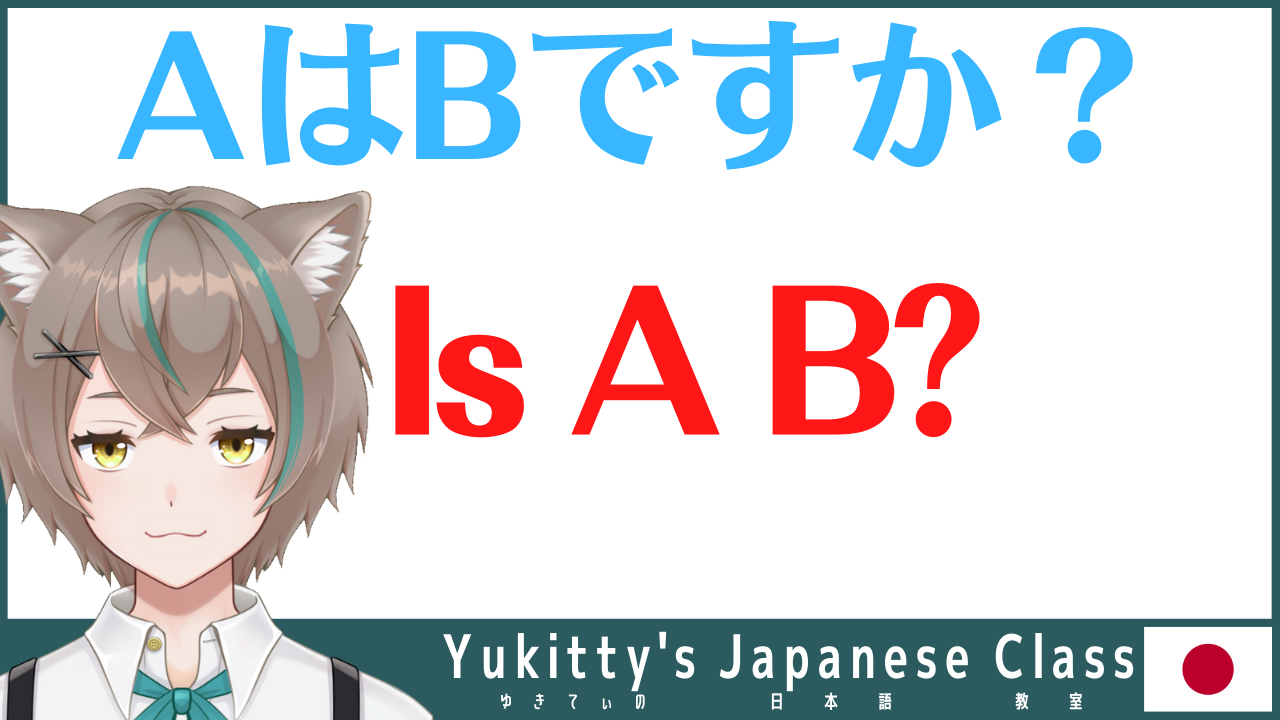
In this beginner Japanese grammar lesson, you will learn how to make simple yes/no questions in Japanese using the pattern A は B ですか?
A は B ですか?
To make a polite question in Japanese, add か at the end of the sentence.
The basic pattern is very simple:

In Japanese writing, the question mark “?” is not always necessary after か. However, I recommend using it in beginner lessons because it makes the sentence easier to recognize as a question.
With I-adjectives, you can also say おいしい? casually. Adding ですか makes the question more polite.
Translate the following sentences into Japanese using A は B ですか?
Is he Mr. Takeshi?
Is this sushi?
Next, let’s look at Japanese question words such as “who,” “what,” “when,” “where,” “why,” “which,” and “how.” Because Japanese and English have different grammatical structures, it is better not to translate them too literally.
Still, the following table gives you a useful beginner-friendly overview.
| Japanese (Hiragana) | English | Kanji | Polite Expression |
|---|---|---|---|
| だれ | Who | 誰 | 何方 / どちら様 |
| なに | What | 何 | – |
| いつ | When | 何時 | – |
| どこ | Where | 何処 | どちら |
| なぜ / どうして | Why | 何故 | – |
| どれ | Which | – | どちら |
| どんな / どうやって / どれくらい etc. | How | – | どのように / いかが |
誰 and 何 are often written in kanji, while いつ, どこ, and なぜ are often written in hiragana.
In Japanese, question words usually appear in the same position as the information you are asking about.
どちら様ですか?
| Japanese | Pronunciation | English | Another Way |
|---|---|---|---|
| ペン | pen | pen | – |
| パソコン | pasokon | PC, personal computer | PC |
| スマホ | sumaho | smartphone | スマートフォン |
| 机 | tsukue | desk | デスク |
| 椅子 | isu | chair | チェア |
| 誕生日 | tanjoobi | birthday | – |
| 期日 | kijitsu | due date | – |
| 予定 | yotee | schedule, plan | 計画 |
| 入口 | iriguchi | entrance | – |
| 出口 | deguchi | exit | – |
| トイレ | toire | restroom, bathroom, toilet | 便所 |
| 駅 | eki | station | – |
| バス停 | basutee | bus stop | – |
| 空港 | kuukoo | airport | – |
| Japanese | Pronunciation | English |
|---|---|---|
| いくつ | ikutsu | how many, how old |
| いくら | ikura | how much, usually for price |
| どれくらい | dorekurai | how much, how long, how far, how often, to what degree |
1. (あなたは)おいくつですか?
*あなたは is omitted. お is added before いくつ to make the expression more polite.
2. (あなたは)おいくつ(欲しい)ですか?
*When shopping or counting, いくつ can mean “how many.”
(これは)おいくらですか?
*これは is omitted. お is added before いくら to make the expression more polite.
(それは)どれくらい(時間が)かかりますか?
*それは and 時間が are omitted if they are obvious from the context.
(それは)どれくらい遠いですか?
Translate the following sentences into Japanese using 誰, 何, いつ, どこ, なぜ, or どんな.
Who is she?
What is it?
When is his birthday?
Where is the station?
Which is my chair?
Why is the sky blue?
How often do you see your girlfriend?
Questions using “why” and “how” can be a little difficult for beginners, so I will explain them in more detail in another article.
To make a simple polite yes/no question in Japanese, add か after the sentence.
Japanese questions do not require word-order changes like English. Instead, question words stay in the natural Japanese sentence position, and か often marks the sentence as a question.
For beginners, start with simple patterns like A は B ですか?, then gradually learn question words such as 誰, 何, いつ, どこ, なぜ, and どうやって.





Comment
コメント一覧 (2件)
I blog often and I genuinely appreciate your information. This article
has truly peaked my interest. I am going to book mark your blog and keep checking for new information about
once a week. I opted in for your Feed too.
Having read this I thought it was extremely enlightening.
I appreciate you taking the time and energy to put this content together.
I once again find myself spending a significant amount of time
both reading and leaving comments. But so what, it was still worthwhile!