


Ever paused an anime to stare at the on-screen text, or tried to read a snack package from a Japanese convenience store, and wondered why the characters look totally different from one line to the next? That’s because Japanese mixes several writing systems at the same time — and the good news is, it’s way less scary than it looks once you know what each one is for.
The Japanese language uses four main writing systems. Understanding the role of each one is the first step toward learning Japanese efficiently, so let’s break them down.
Hiragana is mainly used for grammar, verb endings, and native Japanese words. It can also replace Kanji when the Kanji is difficult or uncommon.
Katakana is mainly used for foreign words, loanwords, onomatopoeia, and emphasis. If you’ve ever seen a character’s name or a sound effect written in sharp, angular characters in a manga, that’s Katakana.
Kanji characters usually carry meaning. Japanese words are often formed by combining multiple Kanji, or Kanji with Hiragana.
Romaji uses the Latin alphabet to show Japanese pronunciation. It’s helpful for absolute beginners learning how Japanese sounds work, before they can read Kana.
Learning Hiragana and Katakana first will make reading and pronouncing Japanese much easier.

One quick warning from me: don’t get too cozy with Romaji! It’s great training wheels, but real Japanese — manga, games, menus, signs — almost never uses it. The sooner you switch over to Kana, the faster you’ll level up. 🎮
The first writing systems you should learn are Hiragana and Katakana. Together, they are called Kana. Since a large portion of every Japanese sentence is written in Kana, mastering them lets you start reading Japanese surprisingly quickly.
Kana pronunciation is relatively easy because there is usually a one-to-one relationship between each Kana character and its sound.
The chart below shows the basic Hiragana (red) and Katakana (blue) characters and their pronunciations.
Unlike English, Japanese pronunciation is very consistent. In most cases, each character is always pronounced exactly the same way.
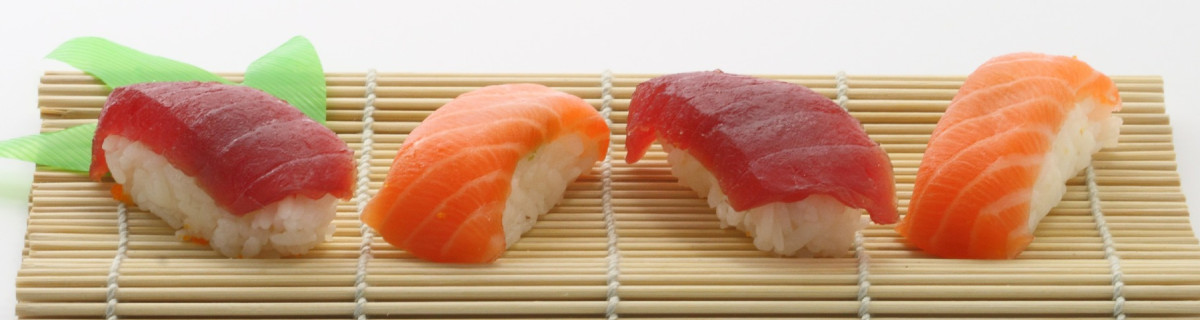
For example, すし is pronounced “sushi.” The character す is always pronounced “su,” and し is always pronounced “shi.”
In English, the letter “A” can be pronounced differently depending on the word. Japanese is much more consistent, which makes it easier for beginners to learn.
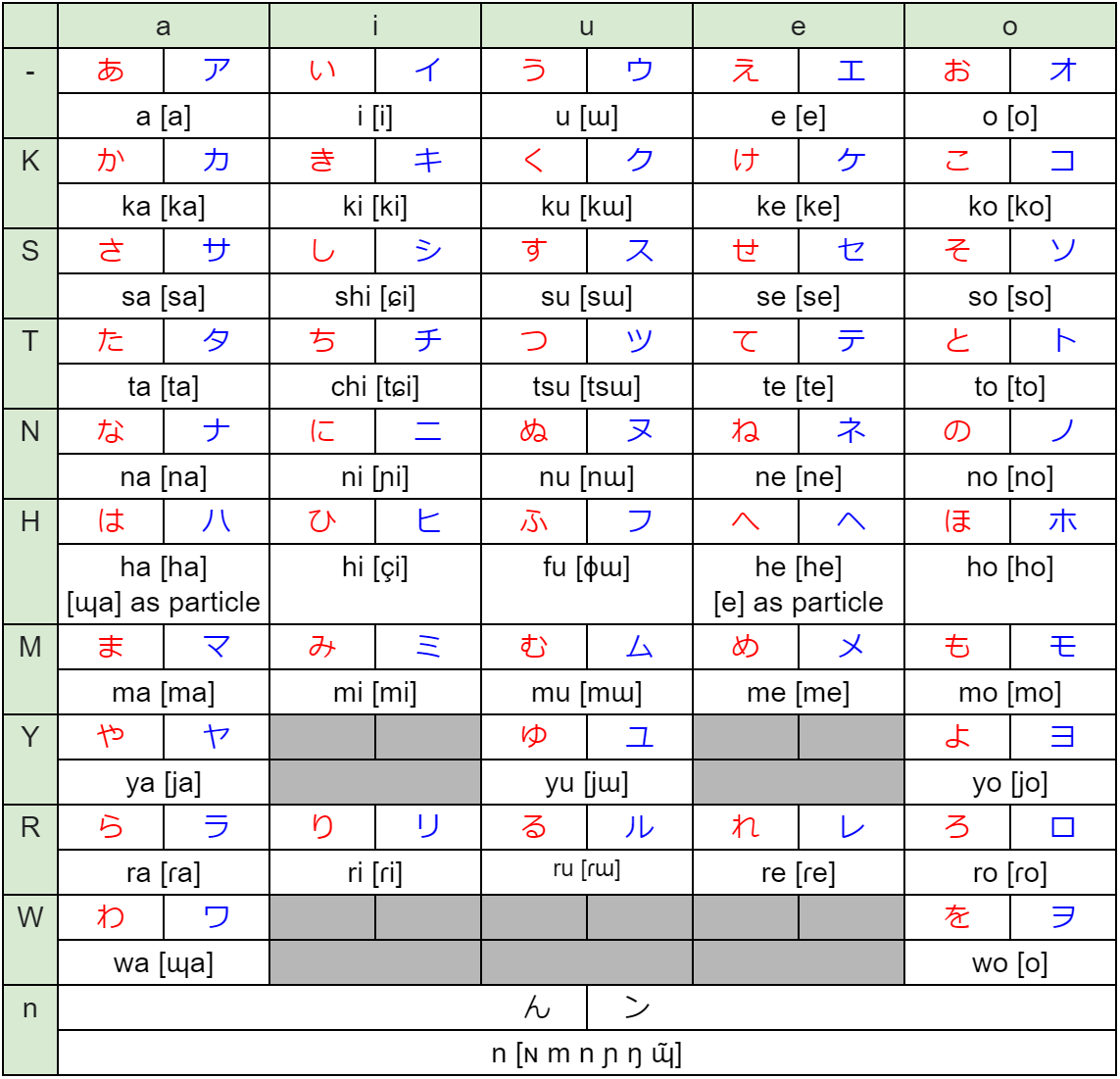
We recommend memorizing Hiragana and Katakana together so you can recognize both writing systems naturally.
A little goes a long way here — even 10 minutes a day of Kana practice adds up fast. Try writing out the name of your favorite anime or Pokémon in Kana as a fun drill! ✏️
Once you’ve got the basic Kana down, there’s a second layer to learn. Japanese also has modified Kana characters, created by adding small symbols or combining smaller Kana characters with the basic ones.
You don’t need to memorize the technical names at first. Focus on learning the pronunciation of each character combination.
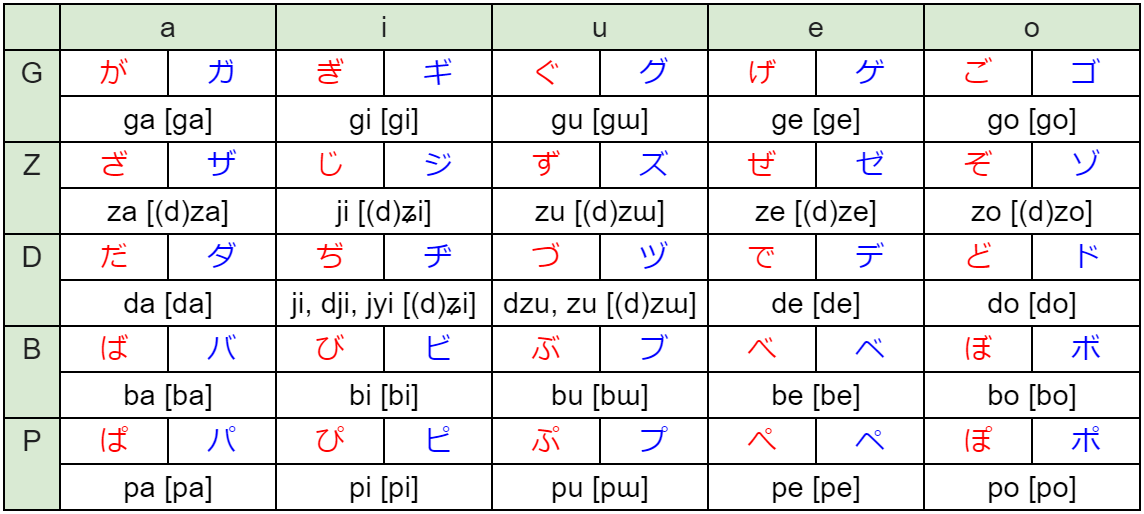
Dakuon (だくおん) are voiced sounds created by adding quotation-like marks (゛) to Kana characters. For example: た → だ.
Handakuon (はんだくおん) are sounds created by adding a small circle (゜) to Kana characters. For example: は → ぱ.
For example, パンダ means “panda” in Japanese, and the pronunciation is very close to the English word.
Easy way to remember: those two little marks (゛) basically “power up” the sound — か (ka) becomes が (ga). The small circle (゜) is rarer and only hangs out with the は-row, turning は into ぱ. 😊

Yoon (ようおん) are combined sounds made by adding small ゃ, ゅ, or ょ characters to Kana.
Sokuon (そくおん) is the small っ character that creates a short pause, or doubled consonant sound.
For example, ピカチュウ is pronounced “Pikachu.”
Notice how チュ in ピカチュウ is one smooshed-together sound, not “chi-yu”? That’s Yoon in action. And that little っ (like in ポッチャマ / Piplup) makes you hold your breath for a beat before the next sound. Anime and Pokémon names are honestly some of the best Kana practice out there! ✨
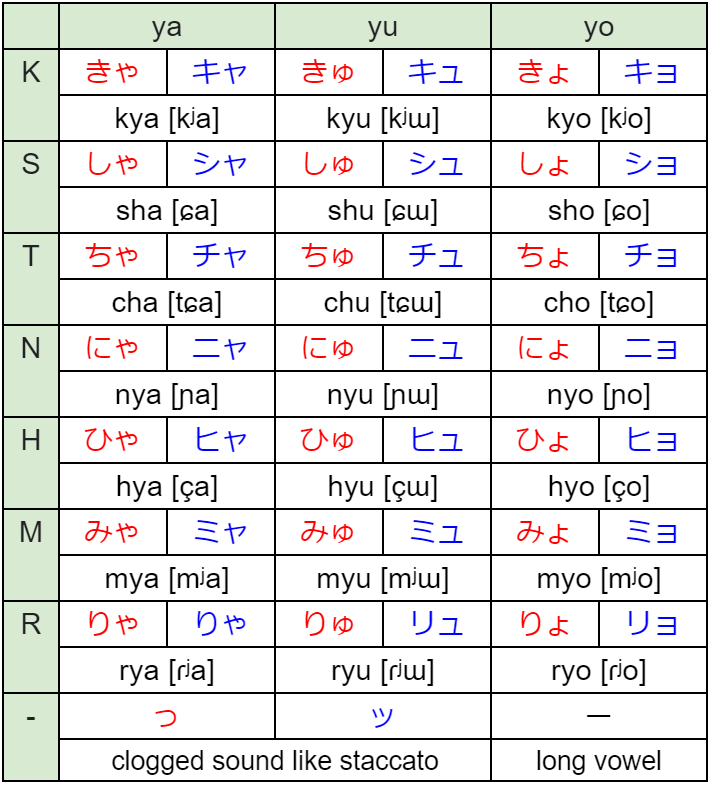
Finally, some Japanese sounds combine Dakuon or Handakuon with Yoon patterns — basically stacking two of the rules you just learned on top of each other.
For example, ギャラドス is pronounced “Gyarados.”
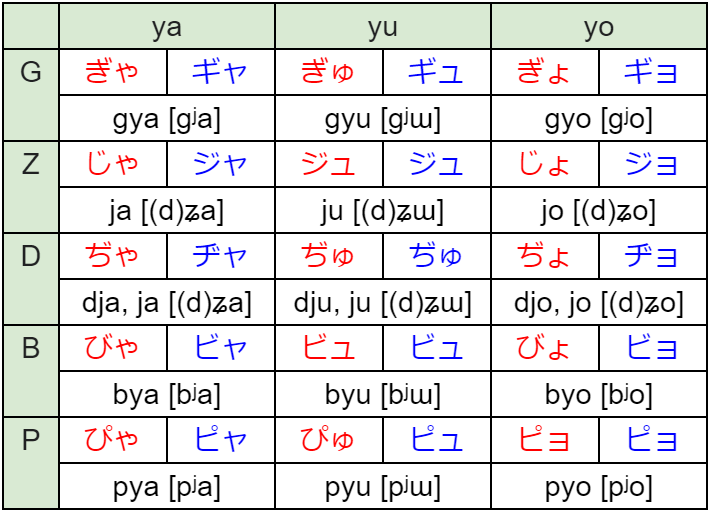
Once you can read Hiragana and Katakana, you’ll be able to pronounce most Japanese words correctly. That’s a huge first step toward learning the language — seriously, give yourself credit when you hit this point.
Keep practicing every day, and try reading simple Japanese words around you, such as food names, anime titles, or signs. Once Kana feels natural, the next stop is basic grammar and your first real sentences.
You made it to the end — nice work! Reading Kana is the door that unlocks everything else in Japanese. Take it one row of the chart at a time, and before you know it you’ll be reading game menus without even thinking about it. がんばって! 💪


Comment